Equine therapy in Prescott, AZ, is an experiential treatment that uses safe, calming interactions between guests and therapy horses, guided by certified facilitators, to build emotional awareness and support healing within addiction and mental health care. At South Coast Behavioral Health, this approach is used as part of personalized, research-based treatment for adults dealing with substance use disorders and co-occurring mental health conditions who want holistic options alongside clinical care.
Different equine therapy methods can be used to meet each guest’s needs, but the core of the work is consistent: horses mirror human emotions and actions, giving therapists useful feedback about a client’s emotional state and helping guests recognize patterns that can be hard to see on their own. That added self-awareness can support trust, emotional regulation, and recovery when the treatment process feels overwhelming.
This overview explains how equine-assisted therapy works, the benefits it can offer for mental health and substance use disorders, and how it fits into addiction recovery programs in Prescott. Equine-assisted therapy dates back to the 17th century, and its continued role in treatment reflects why many programs value it as a practical complement to traditional therapy.
Throughout equine therapy, guests are guided through safe, calming interactions with their chosen horse while under the supervision of their certified group facilitator.
What is Equine Therapy?
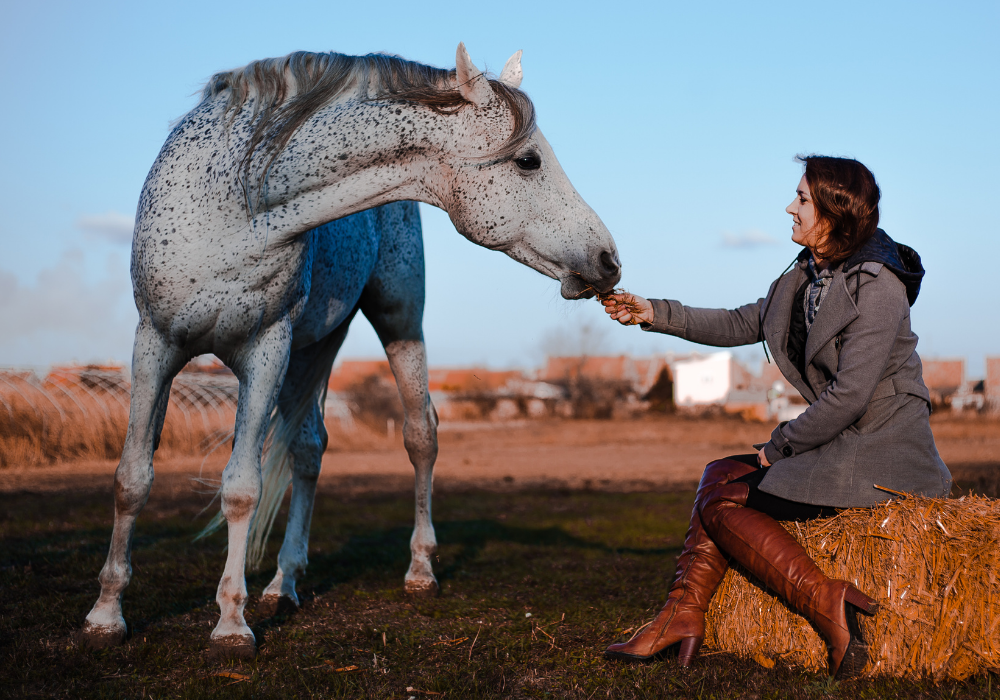
Equine therapy is an experiential form of treatment between a guest and one of our therapy horses. While different methods can be utilized in equine therapy to meet the individual guest’s needs, the main premise of the therapy is to enhance emotional recognition and healing through the connection between horses and people.
Throughout equine therapy, guests are guided through safe, calming interactions with their chosen horse while under the supervision of their certified group facilitator.
Horses are experts in their ability to mirror human emotions and actions — which is why we utilize them in treatment for substance abuse disorders. As they reflect our own emotions it helps us become more cognizant of the way we’re feeling and acting. Self-awareness can be difficult in recovery due to the often overwhelming process, which is why we value techniques that enable guests to relax into the therapeutic approach and find growth while participating in equine therapy.
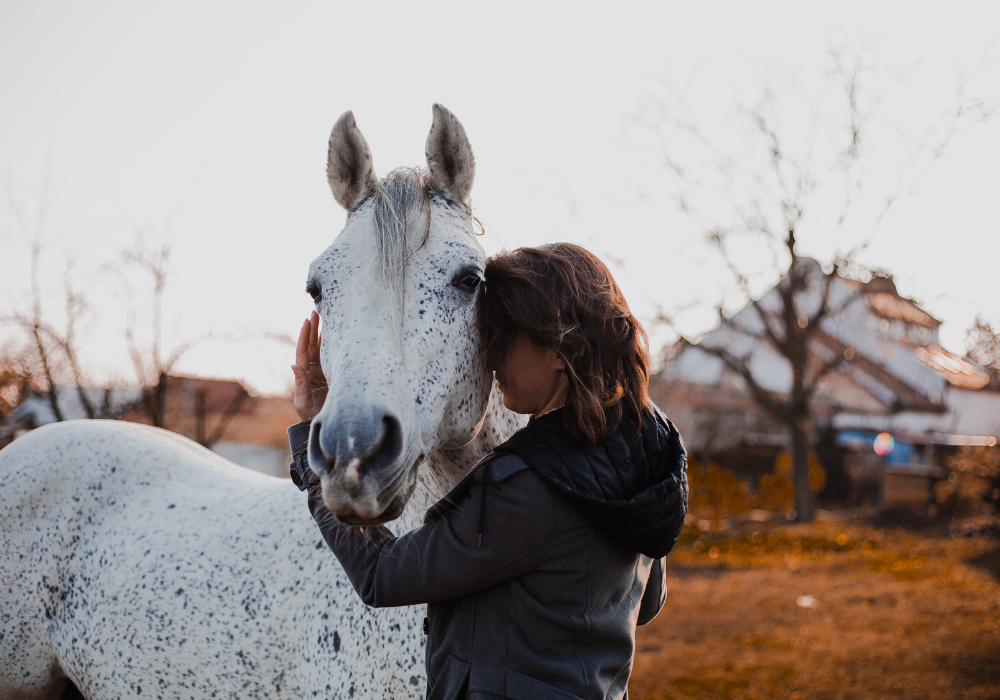
Equine Assisted Therapy with Horses
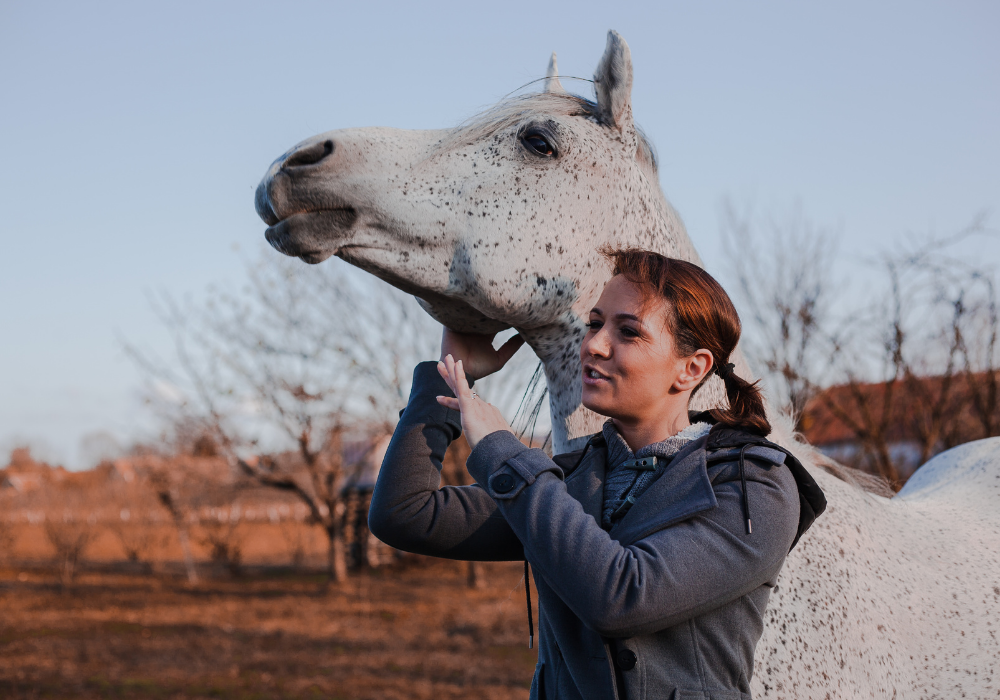
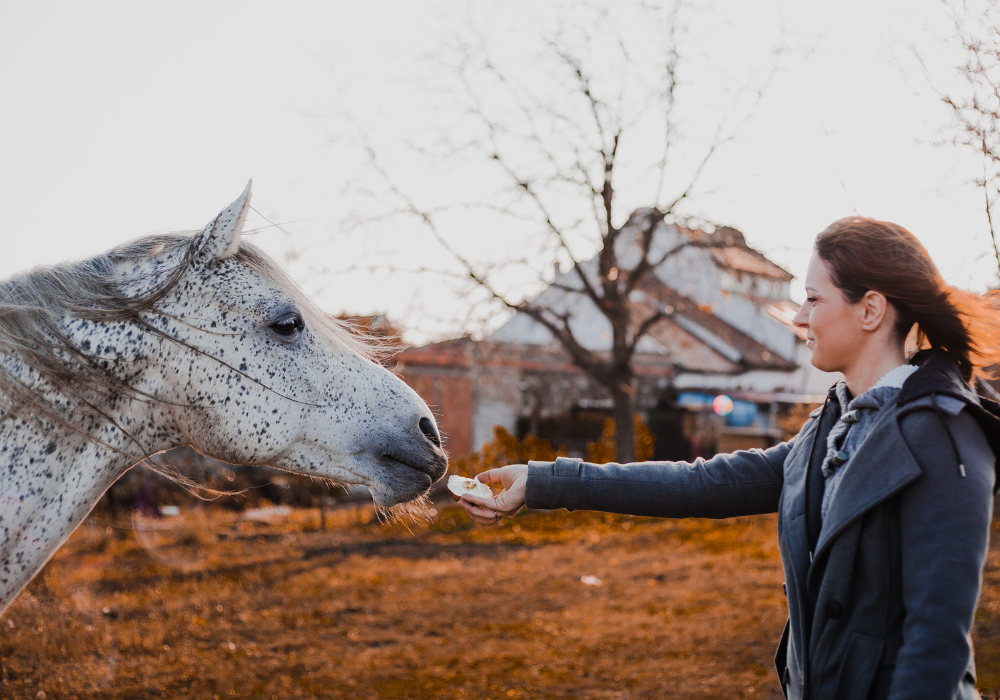
Equine therapy provides a unique experiential approach to mental health and physical rehabilitation, helping guests work through mental health issues and mental health challenges while enhancing cognitive skills, reducing stress, and managing mental health disorders (anxiety, depression, PTSD, etc.). Horses are incredibly sensitive to the environment around them, causing them to be especially receptive to human signals, and their nonverbal cues can help guests recognize whether they are presenting anxiety, anger, or calmness. Overcoming hesitation and weariness to approach such an imposing animal can help guests to learn and build trust they may have lost or forgotten how to cultivate.
Equine therapy assists in the treatment of:
Substance Use Disorders
Anxiety Disorders
Depression
PTSD and Trauma
Stress regulation
ADD/ADHD
Eating Disorders
Behavior Disorders
Learning Difficulties
Equine assisted psychotherapy can support a range of mental health conditions, including bipolar disorder.
Equine-assisted therapy is shown to benefit those suffering from overwhelming levels of stress, sadness, self-esteem, and anxiety due to the innate connection between horses and people. Due to their sensitive nature, horses are able to sense the demeanor of our guests and react to their outward expressions of their feelings– essentially acting as a silent mirror. In addition, horses help create a safe space and supportive environment that makes vulnerability easier and supports emotional growth without fear of rejection. With our therapists’ assistance, these interactions often resemble a personal relationship, allowing our guests the ability to practice interpersonal communication. This can offer something different from traditional talk therapy and other traditional therapies.
What Happens in Equine Therapy?
During an equine therapy session, our certified group facilitators conduct these experiential sessions as part of a broader therapy program, similar to other group sessions. That being said, our therapists challenge guests, presenting each individual with questions that promote mindfulness and introspection while interacting with the horses.
Our equine-assisted therapy (EAT) sessions consist of our therapists guiding guests through activities and encouraging open communication. Programs utilize ground-based and mounted interactions with horses. Equine-assisted learning often emphasizes horse care tasks such as grooming, leading, and observing horse behavior. Throughout the entirety of our horse therapy groups, the group facilitator upholds an open-forum for guests to discuss and express their thoughts and emotions within the equine therapy program.
Some common group prompts include—How did the horse react when you attempted to approach it? Why do you think the horse reacted to your actions in the way it did? What do you think is the best way to approach the horse next time?
Activities can also include navigating obstacle courses and help guests practice new skills, emotional regulation, and self confidence.
In doing so, our guests participate in self-reflection, keeping their focus on the effects of their interactions while creating a thoughtful dialog to review how their modes of self-expression affect others. These horse-assisted groups instill mindfulness when interacting with others so that they may learn to identify and fix communication issues that may have resulted in conflict, promoting healthier forms of socialization.
Biofeedback in the Form of a Horse
Equine-assisted therapy oftentimes can be considered a form of Biofeedback therapy— a mind-body technique that assists guests in controlling involuntary bodily responses (muscle tension, heart rate, or blood pressure) and can help reduce stress. Guests learn to better regulate their emotional and behavioral patterns to alleviate stress, eliminate negative thoughts, and amplify positive insight, and time with horses can lower blood pressure and heart rate during sessions. This regulation work also has a physical component.
What are the Benefits of Equine Therapy?
Our guests begin to tend to our horses, they are naturally guided out of their negative thought patterns and into the therapeutic process of caring for and working alongside them, turning their focus to the needs of another. Essentially, these experiences offer each of our guests the opportunity to take a step back from their personal battle with self-doubt while providing perspective as they nurture another creature.
Benefits of Equine Therapy include:
Builds trust
Increases self-awareness
Boosts self-esteem
Grows social skills
Improves impulse control
Enhances problem-solving skills
Improves verbal/non-verbal communication
Reduces anxiety
Lowers depression
Decreases isolation
Therapeutic riding can also build physical strength and balance. The movement of the horse can relax muscles and improve balance and flexibility.
Interacting with horses can alleviate stress, as well as increase dopamine and other chemicals in the brain. Horses are non-judgmental creatures, caring only how you treat them and behave around them. As a result, interactions with horses provide our guests with an increased understanding of healthy boundaries and the importance of confidence and assertiveness. Cultivating a healthy relationship with their horse often acts as a wonderful starting point for guests who have been surrounded with negative and unhealthy relationships, assisting them with rebuilding their self-esteem and practicing healthy forms of communication. For some guests, including individuals with disabilities, equine therapy can support greater independence and mobility.

Heal From Addiction In Equine Therapy
Our mission and sole purpose is to help you rebuild a life founded on happiness, health, and meaning in sobriety. We will work tirelessly to ensure your success, because we believe you deserve the beauty that comes with a fulfilling life. Equine therapy can support addiction recovery and strengthen your recovery journey.
If you or a loved one would like more information about our residential inpatient program at Royal Life Centers in Prescott, Arizona, where equine therapy is integrated into addiction treatment programs in Prescott, AZ, or any of our addiction treatment programs, please reach out to our admissions team. Equine therapy can be included in individualized treatment plans designed for lasting recovery and long term recovery. Our care supports the whole person and helps each client build a brighter future. Because We Care.
If you would like to learn more about Royal Life Centers